


There is no shortage of AI information. New models, research results and investment announcements appear every week. Each one competes for professional attention.
The harder task is deciding which developments deserve more than a passing glance.
Some questions reveal much more about the direction of artificial intelligence than the biggest headline of the week. They concern what happens to human judgment when AI becomes part of everyday work. They ask whether enormous investment in AI infrastructure reflects durable economic change. They examine what happens when intelligent systems begin making decisions in the physical world.
These are the kinds of questions appearing inside the Future Intelligence Think Tank (FITT), an open professional community hosted on LinkedIn.
And recently, three of them have been particularly difficult to ignore.
What happens when AI makes us faster, but thinking becomes harder?
Productivity remains one of the strongest arguments for adopting AI. Developers can generate code more quickly. Knowledge workers can research, summarise and draft with less effort. In medicine, AI supported analysis can make relevant information easier to access.
Yet measuring output tells us only part of what is changing.
In a recent discussion in Future Intelligence Think Tank, Vlad-Vasile Dediță explored the idea of cognitive debt and the possibility that AI can increase immediate productivity while gradually affecting judgment, attention or professional skill.
It raises an uncomfortable question. If a person completes a task faster with AI, what exactly improved?
The answer could be efficiency. It could also mean that part of the reasoning previously required to complete the task has shifted somewhere else. That distinction matters in professions where understanding how a conclusion was reached is as important as reaching it.
Software engineering offers an obvious example. Generating functioning code quickly can be valuable, but understanding its architecture, dependencies, security implications and failure modes remains essential. The same question becomes more consequential in medicine, finance or any environment where decisions carry significant responsibility.
AI adoption therefore creates a second challenge alongside implementation: understanding how human expertise changes once intelligent assistance becomes routine.
What skills become more important when AI handles more of the execution? Which ones weaken? And how do organizations recognize the difference?
Those questions are currently part of the conversation inside FITT.

How much of the AI boom belongs to the technology, and how much belongs to the market around it?
Billions are moving into chips, data centers, energy infrastructure and computing capacity, companies are reorganizing strategies around AI, and expectations for future demand are influencing investment decisions today.
Naturally, comparisons with previous technology bubbles have followed.
But “Is AI a bubble?” is almost too simple a question.
A more useful one is what exactly the market is pricing in.
AI can simultaneously represent a genuine technological transition and attract expectations that outrun current commercial reality.
Infrastructure complicates the picture further. AI growth depends on physical constraints that receive far less attention than models themselves: available computing capacity, electricity, construction, networking and the economics of running increasingly demanding systems.
In a recent FITT discussion, Tara Canham examined the AI investment boom through this wider economic and infrastructure lens. The discussion matters because decisions are already being made on the assumption that AI demand will continue expanding.
Executives have to decide where to invest. Founders have to decide which markets will still exist once the current enthusiasm settles.
Investors have to distinguish durable infrastructure demand from temporary exuberance. Engineers, meanwhile, eventually have to build the systems everyone else is forecasting.
Those perspectives do not always produce the same answer and that is precisely why the question becomes interesting.

What changes when AI can act in the physical world?
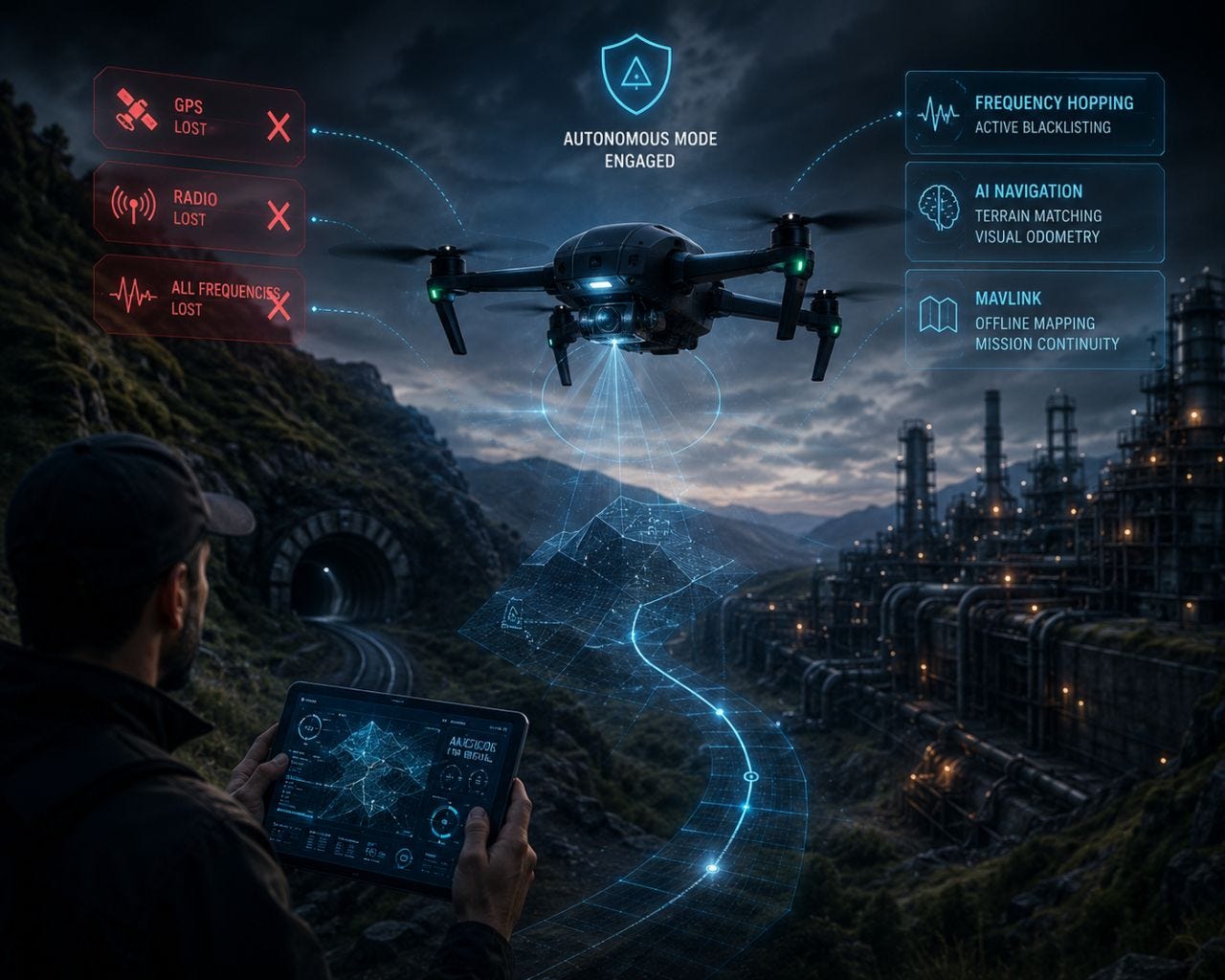
Some of the most consequential AI developments may eventually happen far away from a chatbot window. Consider a drone that loses access to GPS and radio communication. Traditional remote operation becomes extremely difficult. An autonomous system, however, may be able to continue navigating using onboard intelligence, local sensors and a previously defined mission.
That possibility formed the basis of another recent conversation initiated by Alexandru Parasca, focused on autonomous drones and the growing capabilities of Physical AI.
Industrial robots, autonomous vehicles, inspection systems and other intelligent machines increasingly need to interpret their surroundings and respond without constant human input.
A poor chatbot response can be corrected. A poor decision made by a machine moving through a warehouse, factory or public environment has physical consequences.
Autonomy therefore forces questions about reliability, edge computing, perception, safety and human oversight into the same discussion as artificial intelligence, and it makes the relationship between human and machine intelligence considerably more tangible.
How much autonomy should a system receive? When should a human remain in control? What level of uncertainty is acceptable before a machine must stop?
The useful part starts when somebody disagrees
There is a connection between cognitive debt, AI investment and autonomous machines: none of them can be understood especially well through one professional lens.
An engineer may see a technical constraint that an investor misses. A researcher may recognize that the evidence behind a popular claim is weaker than it appears. An executive may understand the organizational consequence of a technology that works perfectly well in a laboratory. Someone working directly in an industry may identify a practical problem that changes the entire premise.
That interaction is what Future Intelligence Think Tank is designed to encourage.
The community now includes more than 900 professionals, with conversations spanning human and artificial intelligence, responsible AI, Physical AI, emerging technology and the future of work.
The goal is to keep asking questions that remain interesting after the headline disappears.
The Future Intelligence Think Tank website brings together the community’s purpose, selected conversations and current insights. It offers a public introduction for readers who want to understand the initiative before joining the discussion.
Future Intelligence Think Tank is open to professionals who want to examine questions like these with people working in research, technology and business. Join the LinkedIn group to read the discussions, challenge an argument or introduce a question of your own.